
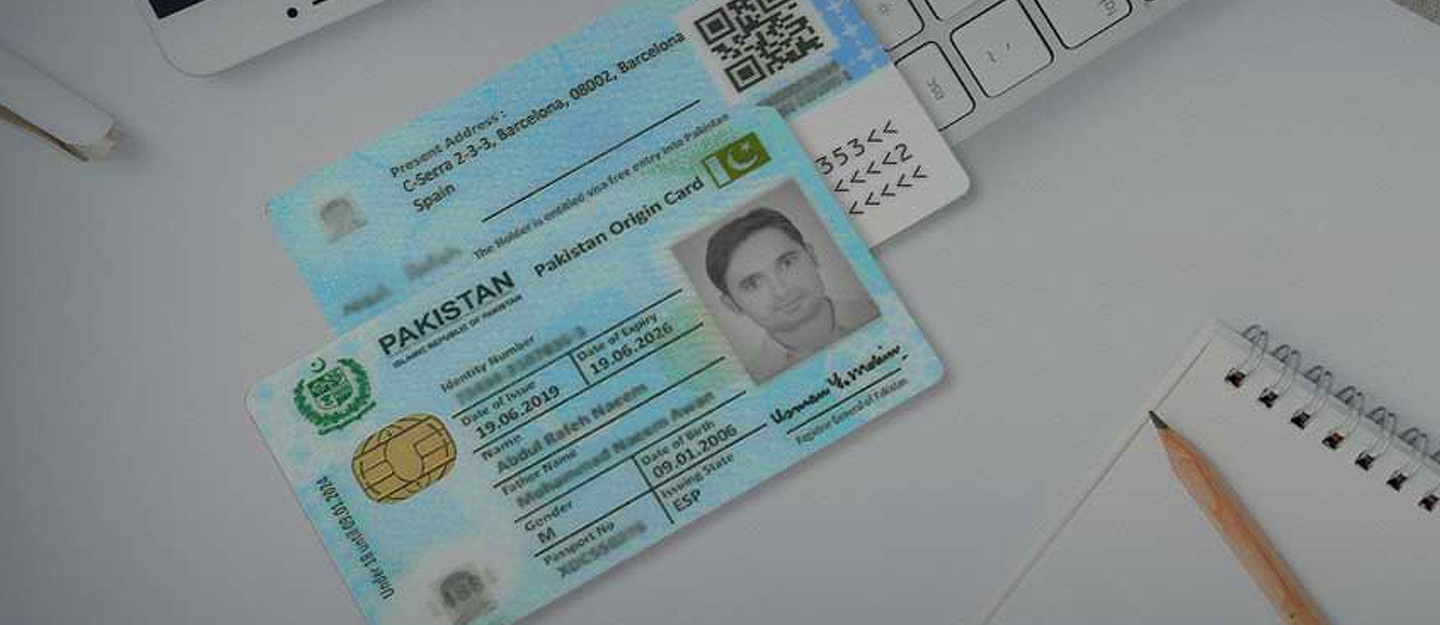
Pakistan Origin Card (POC) Lawyer in Pakistan
POC Issuance, Refusal, Marriage, Identity & Deportation Protection Matters
Saifullah Muhib Kakakhel
Advocate Supreme Court of Pakistan | Practicing in Peshawar & Islamabad
In modern times, the idea of identity is no longer confined within the borders of a single country. Many individuals of Pakistani origin live abroad, build families in other jurisdictions, and acquire foreign nationality, yet continue to maintain strong personal, cultural, and economic ties with Pakistan.
The Pakistan Origin Card (POC) is designed to recognise this reality.
While it may appear, at first glance, to be a simple facilitative document, its practical significance is much broader. It allows individuals who are not Pakistani citizens to maintain a lawful and recognised relationship with Pakistan without undergoing the formal process of re-acquiring nationality.
From a legal perspective, therefore, the POC operates in a unique space. It is not citizenship, but it is also not merely a visa. It provides a stable and continuing connection with the State.
Understanding POC in Comparison with Global Systems
To appreciate the importance of the POC, it is useful to understand how similar situations are handled internationally.
In countries such as the United States, individuals may obtain permanent residency (Green Card), which is primarily based on immigration categories such as employment or family sponsorship.
In the United Kingdom, indefinite leave to remain allows a person to stay permanently, but it is still rooted in immigration control and often requires a history of residence.
European countries follow similar models, where long-term residence is granted after continuous lawful stay.

- Compassionate Legal Guidance
The POC differs in a fundamental way.
- It is not based on residence
- It is based on origin, relationship, or connection
A person does not need to live in Pakistan for years to qualify. The relationship exists because of who they are and how they are connected to Pakistan.
Legal Status and Scope of POC
The POC is issued under Pakistan’s legal and administrative framework, primarily through NADRA.
It provides:
- Visa-free entry into Pakistan
- Ability to stay for extended or indefinite periods
- Recognition of Pakistani origin or family linkage
- However, it does not grant:
- Voting rights
- Eligibility for public office
- Full constitutional status of a citizen
It is, therefore, a facilitative legal status—stronger than temporary permission, but distinct from nationality.
Practical Benefits of Holding a POC
The true value of a POC becomes evident in practical use.
Freedom of Entry and Travel
A POC holder does not need to apply for a visa every time they wish to enter Pakistan. This removes a major administrative hurdle, particularly for individuals who travel frequently for family or business purposes.
Long-Term Stay Without Uncertainty
Unlike visa holders, who are bound by strict timelines, a POC holder can remain in Pakistan without the constant concern of expiry or renewal.
- This is particularly beneficial for:
- Families visiting for extended periods
- Individuals managing property or business
- Overseas Pakistanis maintaining dual presence
- Ownership of Property
One of the most important advantages is the ability to acquire and hold property in Pakistan.
This allows individuals to maintain:
- Residential property
- Investment interests
- Long-term economic ties
- Financial and Banking Access
In practical terms, many financial institutions require recognised identification within Pakistan.
A POC facilitates:
- Opening bank accounts
- Conducting financial transactions
- Managing assets
- Business and Investment Opportunities
The POC enables individuals to participate in business activities within Pakistan.
This includes:
- Investment in commercial ventures
- Partnership in business
- Economic participation
- Stability for Families
For families, the POC simplifies multiple aspects of life, including:
- Documentation of children
- Educational processes
- Residence arrangements
- Continuity of Legal Identity
Perhaps the most important benefit is continuity.
The POC allows individuals to maintain a recognised identity connected with Pakistan without repeatedly proving their background.
Eligibility for Pakistan Origin Card
Eligibility for a POC is based on the existence of a genuine and legally recognisable connection with Pakistan.
Former Pakistani Citizens
Individuals who were previously Pakistani nationals and later acquired foreign nationality are generally eligible.
The key requirement is proof of prior status.
Children and Grandchildren
Children and, in many cases, grandchildren of Pakistani citizens may qualify.
However, in practice, these cases depend heavily on:
- Clear lineage
- Consistent documentation
- Foreign Spouses
- Foreign nationals married to Pakistani citizens may apply.
However, the process depends on:
- Valid marriage
- Proper registration
- Consistency of records
- Parents and Close Relatives
In certain cases, parents or close relatives may qualify, particularly where there is a strong and continuous connection.
The Role of Documentation
A significant number of POC issues arise due to documentation problems.
These include:
- Differences in names across documents
- Variations in dates of birth
- Lack of proper family linkage
- It is important to understand:
Even minor inconsistencies can create serious delays
- Marriage-Based POC Cases — Real Issues
- Marriage-based applications are among the most common.
However, they often face difficulties such as:
- Marriage not formally registered
- Documents issued in different jurisdictions
- Inconsistencies in records
Even genuine marriages may face complications if documentation is not properly aligned.
Complex Identity and Nationality Cases
Some cases go beyond routine processing and involve deeper issues.
These may include:
- Individuals with multiple nationalities
- Cross-border identity records
- Historical inconsistencies
In such situations, the issue is not just the presence of documents, but whether they present a coherent and consistent identity.
Afghan Linkage, ACC & PoR
In Khyber Pakhtunkhwa and surrounding areas, many cases involve Afghan linkage.
This may arise where:
- The individual has held ACC or PoR
- Family members have Afghan documentation
- Authorities act on suspicion
- It is important to clarify:
- Holding ACC or PoR does not automatically negate Pakistani citizenship
Each case must be examined on its own facts.
Citizenship in Doubt — Legal Requirement
Where citizenship is questioned, the matter cannot remain unresolved.
The law requires:
- Proper determination
- Clear decision by competent authority
This may involve obtaining a citizenship certificate or formal clearance.
Security Clearance and Sensitive Cases
Certain cases require deeper scrutiny, particularly where:
- Cross-border identity is involved
- Background verification is required
- Such cases often take longer due to internal processes.
When Applications Face Difficulty
In practice, applicants usually face:
- Delays without explanation
- Repeated objections
- Refusal without clarity
In many cases, the issue lies in how the case has been presented rather than eligibility itself.
Legal Strategy in POC Matters
A structured approach is essential.
This includes:
- Identifying the core issue
- Aligning all records
- Presenting a consistent narrative
- Without this, repeated applications may not succeed.
- Court Intervention in POC and Identity Matters
Where administrative remedies are insufficient, the High Court may be approached.
The Court examines:
- Whether the process is fair
- Whether delay is justified
- Whether rights are being affected
Important Case Law
Noreen Masood Case
This case dealt with issues relating to marriage recognition, children’s documentation, and citizenship rights.
The Court emphasised that:
- Marriage cannot be ignored due to administrative gaps
- Children cannot be deprived of rights due to record deficiencies
- Authorities must properly recognise family relationships
Qasim Khan Case
This case addressed issues relating to Pakistani females married to foreign or Afghan nationals.
The Court clarified:
- Marriage does not affect a Pakistani woman’s citizenship
- Children may hold dual nationality (subject to law)
- ACC or PoR does not automatically negate citizenship
- Citizenship must be formally determined where in doubt
- Protection Against Deportation & Family Separation
In recent times, enforcement actions have increased against individuals without valid documentation such as visa or POC.
Risk of Family Separation
In many cases:
- One family member is Pakistani
- Others are undocumented
- Children are involved
Deportation in such situations may result in serious disruption of family life.
Approach of Courts
The courts have recognised that:
- Family life is an important consideration
- Each case must be examined individually
- Harsh or mechanical action should be avoided
- Stay Orders Against Deportation
Where appropriate, the High Court may grant.
Stay orders against deportation
This allows:
- Protection from immediate removal
- Proper examination of legal status
- Present Ground Reality
- Given current enforcement measures, many individuals approach courts at a late stage.
However, courts may still intervene where justified.
Professional Representation
Saifullah Muhib Kakakhel
Advocate Supreme Court of Pakistan | Practicing in Peshawar & Islamabad
Extensive experience in:
- POC matters
- Identity and nationality disputes
- Deportation protection
- NADRA litigation
- Constitutional petitions
Frequently Asked Questions
Who is eligible for POC?
Persons of Pakistani origin, spouses, and children with proper documentation.
Why is my case delayed?
Usually due to verification or documentation issues.
Can refusal be challenged?
Yes, depending on circumstances.
Can deportation be stopped?
Yes, courts may grant stay orders in appropriate cases.
Final Note
POC matters are often misunderstood as simple applications.
In reality, they involve complex questions of identity, documentation, and legal status.
With proper handling, most cases can be resolved effectively.
Conclusion
Every case is different.
The key lies in understanding the issue and addressing it properly, rather than treating it as routine.